Learn how math manipulatives and visual aids boost K-8 math understanding. Discover effective strategies for utilizing manipulatives to improve math performance.
Math can be a challenging subject for many K-8 students, but with the right tools, it becomes much more accessible. This blog post explores the role of manipulatives and visual aids in math intervention, highlighting how hands-on tools can help students develop a deeper understanding of math concepts. Whether you are a teacher, parent, or education professional, you'll find valuable insights into how these tools can transform math learning.
Math manipulatives are physical objects that help students visualize and understand abstract math concepts. Examples include blocks, counters, abacuses, and digital tools that simulate these physical items. These tools make math tangible, allowing students to manipulate objects to solve problems.
There are two main types of math manipulatives: concrete and virtual. Concrete manipulatives include physical items like base-ten blocks, fraction strips, and geometric shapes. Virtual manipulatives are digital tools that provide similar interactive experiences on a screen.
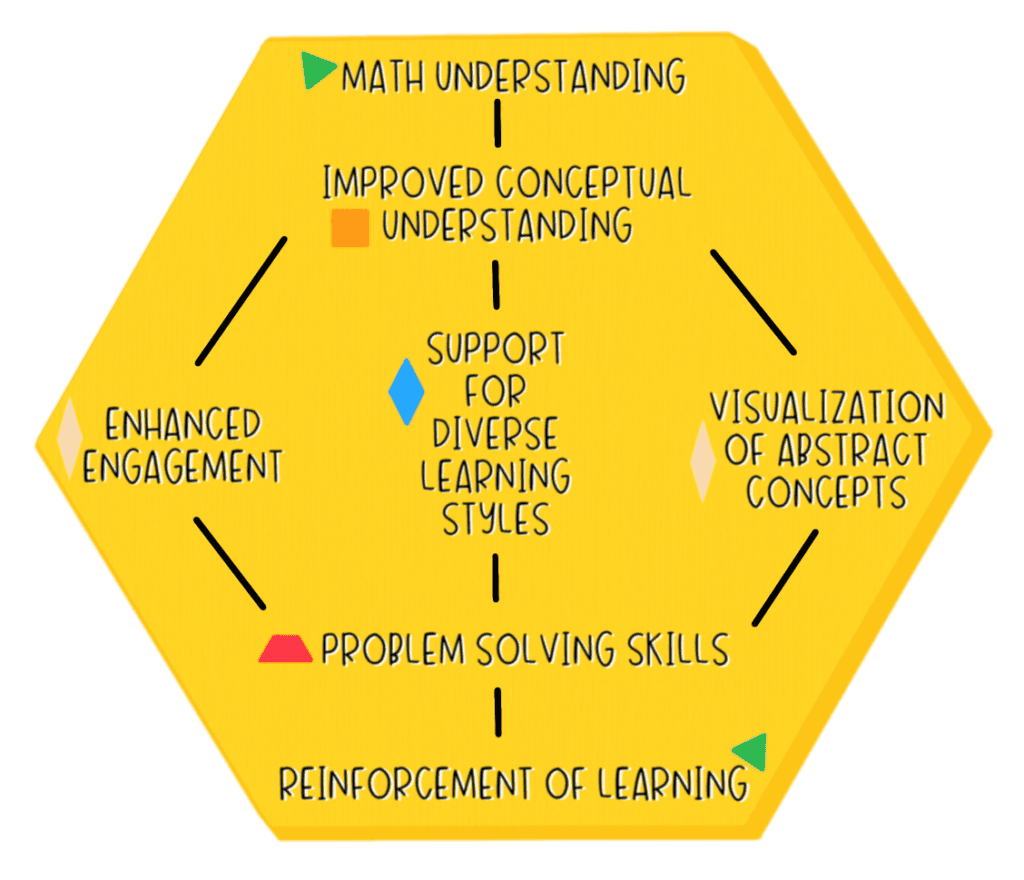
Using manipulatives in math education offers several benefits:
Visual aids are tools that help illustrate math concepts through visual representation. They include charts, diagrams, graphs, and interactive whiteboards, which can simplify complex ideas and make them easier to understand.
Visual aids in math education can take various forms. They can be physical or digital and are designed to help students visualize and understand mathematical concepts. Charts and diagram can be used to show relationships between numbers and concepts. For example, a chart showing the multiplication table helps students memorize and understand multiplication. Graphs help students visualize data and understand trends and patterns. Line graphs can be used to teach students how to interpret changes over time. Interactive whiteboards and digital tools allow for dynamic and interactive learning experiences. Tools like smartboards can be used to draw and manipulate shapes to explore geometric concepts.
Visual aids provide several advantages in math education. They enhance the learning experience by making abstract concepts more tangible and accessible:
To effectively use manipulatives, teachers should intentionally incorporate them into their lesson plans. This involves careful planning and alignment with educational standards. Teachers can use manipulatives to introduce new concepts, provide practice, and assess understanding. For example, use fraction circles to teach fractions before moving on to abstract exercises. Additionally, teachers should ensure that the use of manipulatives supports learning objectives and standards. This can be done by referencing curriculum guidelines and integrating appropriate manipulatives into specific lessons.
Visual aids should be integrated thoughtfully to maximize their impact. They should complement the teaching material and be used to clarify complex concepts. Use visual aids to clarify and reinforce key concepts. For example, use a number line on the board to help students understand positive and negative numbers. Using technology can also help. Leveraging digital tools and interactive whiteboards can help engage students and enhance learning. Apps that allow students to manipulate shapes and numbers can provide additional practice outside of traditional worksheets.
Despite their benefits, there are challenges in using manipulatives and visual aids. Schools often face limitations that can hinder the effective implementation of these tools:
Solutions to these challenges include innovative approaches and support for educators. Use low-cost or homemade manipulatives and free digital tools. Teachers can create their own manipulatives using everyday items like paper clips or beads. Teacher training can also support the effective integration of these tools. Workshops and online courses can offer teachers the skills they need to use manipulatives and visual aids effectively.
Math manipulatives and visual aids play a crucial role in math intervention, particularly for K-8 students. They help students understand abstract concepts, engage more deeply with the material, and cater to diverse learning styles. By integrating these tools into the classroom, educators can enhance students' math skills and confidence.
We'd love to hear about your experiences with math manipulatives and visual aids! Share your stories in the comments below, and don't forget to subscribe to our newsletter for more educational insights and resources. Together, we can make math learning more effective and enjoyable for all students.
Don't forget to subscribe to our newsletter for more tips and resources on improving math performance and supporting student success.